
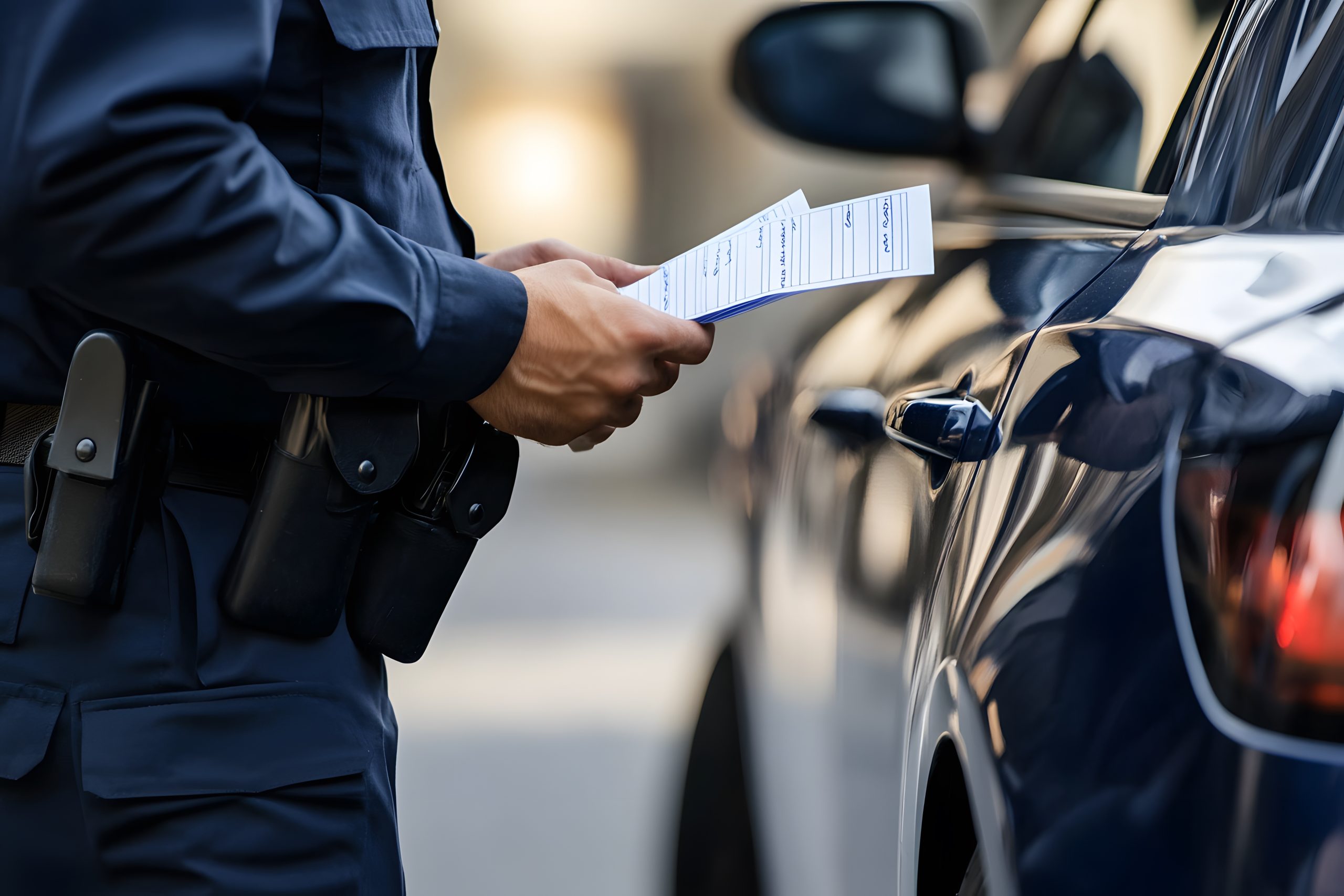
It is sitting on the passenger seat, or on the kitchen counter under the mail, or folded in the visor where you shoved it on the highway shoulder outside Gravenhurst on the Canada Day weekend.
You have looked at it twice. Both times you thought the same thing. It is only a couple hundred dollars. You will deal with it.
You have less time than you think, the number on the ticket is the smallest cost attached to it, and the option that feels like “just dealing with it” is the one that does the most damage. Paying that fine is a guilty plea. It is not a fee. It is a conviction.
Here is exactly what the 15 days mean, what happens if you let them pass, and what the choice you make this week will cost you three years from now.
What does the 15 days on the back of the ticket actually mean?
When an officer serves you with an offence notice, which is the blue or yellow ticket you know as a traffic ticket, the Provincial Offences Act gives you 15 calendar days to choose one of three options printed on the back.
Calendar days. Weekends count. Statutory holidays count. If your ticket was written on the Canada Day long weekend, that clock is nearly out.
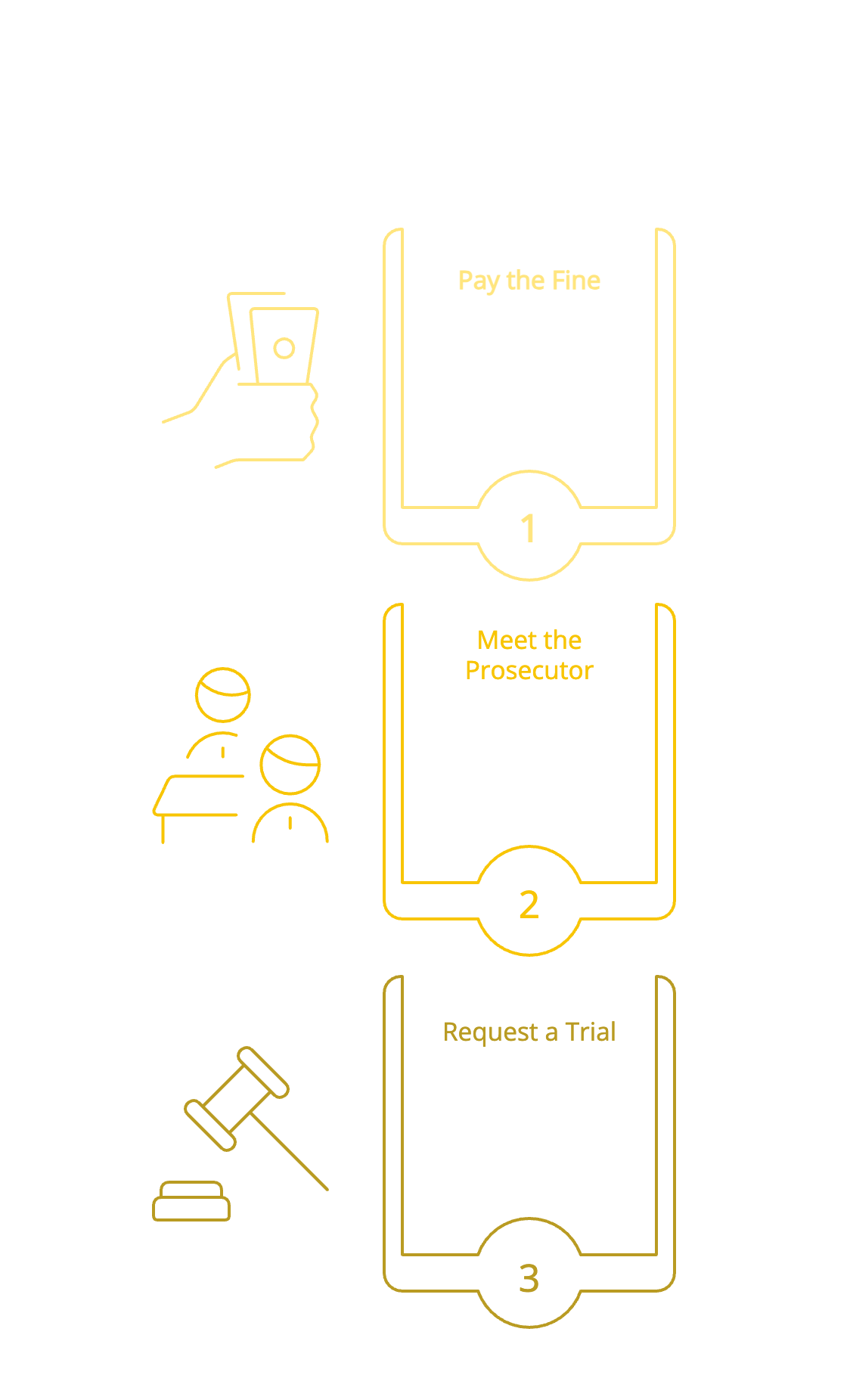
Your three options are:
Option 1: Pay the fine. This is a plea of guilty. Under section 8 of the Provincial Offences Act, payment registers a conviction against you.
Option 2: Request a meeting with the prosecutor. Sometimes called early resolution, this is a meeting to discuss whether the charge can be resolved without a trial.
Option 3: Request a trial. You dispute the charge and the matter is set down before a justice of the peace.
Notice what Option 1 is and is not. It is not a payment. It is an admission of guilt with a payment attached, and the fine is the part of it that does the least harm to you.
What happens if you do nothing at all?
Doing nothing is not neutral. It is a decision, and the law treats it as one.
If you do not exercise one of the three options within 15 days, you are deemed not to dispute the charge. A clerk of the court reviews your certificate of offence, and if it is not defective, a conviction may be entered against you in your absence. Additional court costs are added to what you owe.
You do not get a phone call. You do not get a warning. You get a Notice of Fine and Due Date in the mail, sent to whatever address the Ministry of Transportation has on file for you. If you moved and did not update it, you get nothing at all, and the conviction happens anyway.
At that point the ticket is no longer a ticket. It is a court-ordered debt with a conviction sitting behind it.
What happens when the fine goes into default?
This is where a $250 problem becomes a much bigger one.
When a fine is not paid by the due date, it goes into default and the province has a wide set of tools available:
- An administrative fee is added to the amount you owe.
- Your driver’s licence can be suspended. Section 69 of the Provincial Offences Act authorizes the court to order the Ministry of Transportation to suspend your licence for a defaulted fine on a driving offence, including speeding. More than half of all licence suspensions issued in Ontario are for unpaid fines.
- Your licence plate can be denied at renewal. No sticker until the fine is cleared.
- Your debt can be reported to a consumer reporting agency, which puts it on your credit file.
- Collection activity begins. Wage garnishment, bank account garnishment, liens against property, and referral to a private collection agency are all on the table.
- There is no expiry. Unpaid provincial fines are not subject to a limitation period. The debt does not go stale.
There is one more consequence that catches people badly. If your licence is suspended for an unpaid fine and you keep driving, because you never received the notice or never opened it, you are now committing a separate and much more serious offence. Driving under suspension carries its own fines, its own suspension, and the possibility of vehicle impoundment. Drivers regularly find out about the original suspension only when they are stopped for something else.
Is paying the fine really that bad?
The fine is a one-time cost. The conviction is not.
Once a conviction is registered, it goes on your driving record, and your insurance company will find it at renewal. A minor speeding conviction can raise your premium meaningfully. A major or serious one can move you out of the standard market entirely and into high-risk insurance, where the numbers stop looking like car insurance at all.
Run the arithmetic on a common scenario. A $250 fine paid without a fight becomes a conviction. That conviction sits on your abstract for three years. If it adds even a modest amount per month to your premium over that period, the ticket has quietly cost you many multiples of the number printed on it.
Then there are the demerit points. Speeding convictions in Ontario carry points once you are far enough over the limit, and those points accumulate. Accumulate enough and you receive a warning letter, then an interview with the Ministry, then a suspension. Our guide to demerit points in Ontario sets out the thresholds for both fully licensed and novice drivers, and explains the difference between how long points stay on your record and how long insurers can see the conviction. Those are two different clocks, and almost nobody knows it.
If your premium has already jumped because of a conviction, our page on insurance disputes explains what can be done about it.
I already missed the 15 days. Is it over?
Not necessarily. Act quickly.
If a conviction was entered against you in your absence on an offence notice, you may be able to apply to a justice for a reopening within 15 days of becoming aware of the conviction. If it is granted, the conviction is struck and the matter proceeds as though you had responded on time.
If you need more time to pay, an extension of time to pay can be applied for at the court office. If a conviction has been entered and you want to challenge it on the merits, an appeal is a separate process with its own strict deadline.
These are technical applications with hard limits, and the outcome often turns on how the request is framed and how quickly it is filed. This is a bad time to guess. It is a good time to call.
What should you do this week?
Read the ticket, not the amount. Find the service date and count 15 calendar days from it.
Do not pay it. Not yet. Not until someone who does this for a living has looked at it.
Do not throw it out. The charge does not need your cooperation to become a conviction.
Call us. The consultation is free, it takes a few minutes, and it will tell you whether you are holding a ticket worth fighting. Most of them are.
How Xpolice can help
We have been fighting traffic tickets in Ontario since 2003. The team is made up of licensed paralegals and former police officers with more than 120 years of combined experience, which means we know how these files are built because some of us used to build them.
We request the disclosure. We deal with the prosecutor. We file what needs to be filed within the deadlines that matter. We go to court for you so that you do not have to take a day off work to stand in a hallway in a courthouse you have never been to before.
And we do not aim to plead you down. Most firms will happily reduce your charge and call it a win, because a reduction is easier than a fight. But a reduced conviction is still a conviction, and your insurer treats it as one. We are not just interested in reducing your charges. Our goal is to beat it.
You can read about how we work from the first call to resolution, or see the range of charges we fight every day.
Call before you pay. 1-888-XPOLICE (1-888-976-5423). Free consultation, no obligation.
Contact us today and find out what your ticket is really worth.
Frequently Asked Questions
Does paying an Ontario traffic ticket mean pleading guilty?
Yes. Under section 8 of the Provincial Offences Act, paying the fine on an offence notice is a plea of guilty and a conviction is registered against you. The conviction goes on your driving record, demerit points may apply, and your insurance company will see it at renewal. Paying is the fastest way to resolve a ticket and the most expensive one.
What happens if I never respond to my traffic ticket?
After 15 calendar days you are deemed not to dispute the charge, and a conviction may be entered against you in your absence with additional court costs added. Once the fine goes into default, the province can suspend your driver’s licence, deny your plate renewal, report the debt to a credit bureau, garnish wages, and pursue collection indefinitely, since unpaid provincial fines have no limitation period.
Can I still fight a ticket after the 15 days have passed?
Possibly. If a conviction was entered in your absence, you may be able to apply for a reopening within 15 days of becoming aware of it. Other remedies, including an extension of time to pay and an appeal, have their own separate deadlines. These applications are time-sensitive and technical, so call as soon as you realize the deadline has passed rather than waiting to see what happens.