
 Canada Day is one of the biggest driving weekends of the year in Ontario. Cottages fill up, highways back up, parties run late, and a lot of people are on roads they do not travel often, at hours they do not usually drive. It is a great weekend. It is also one of the most heavily enforced.
Police services across the province plan for it. Patrols increase on the 400-series highways and the routes into cottage country, RIDE programs go up in the evenings, and officers pay close attention to the behaviours that cause long weekend collisions. If you are heading out for July 1, your odds of being pulled over are higher than on an ordinary weekend, and the charges that come out of these stops can be serious.
Here is what Ontario drivers should know before the long weekend, and what to do if you get a ticket.
Why long weekends lead to more traffic enforcement
The simple answer is that long weekends combine more drivers with riskier conditions. There is more traffic, more travel after dark, more alcohol around holiday gatherings, and more drivers in unfamiliar areas. Collision data reflects all of it, so police respond with visible, targeted enforcement.
This is not unique to any one service. Police forces across Ontario time their road safety campaigns to summer holidays, and Canada Day sits right in the middle of the season. The focus areas tend to be consistent: speeding, aggressive driving, distracted driving, and impaired driving, plus the usual Highway Traffic Act checks that come with any stop. The practical takeaway is that the margin for error is smaller on this weekend than almost any other.
Common Canada Day driving charges
Most long weekend tickets fall into a handful of categories.
Speeding is the most common, especially on open highways where speed creeps up after a long stretch of driving. Distracted driving is close behind, often because people are holding a phone for directions to a cottage or campsite they have never been to. Impaired driving charges rise sharply on the drives home from parties and events, which is exactly what RIDE stops are set up to catch. Stunt driving is easier to trigger than people expect on a quiet highway, and it carries by far the harshest immediate consequences. And driving under suspension catches drivers who did not realize their licence was suspended, often over unpaid fines, until an officer runs their information at a stop.
Each of these can affect your record, your demerit points, and your insurance for years. None of them is the kind of thing you want to deal with on autopilot.
What happens if you are charged with stunt driving
Stunt driving deserves its own section, because the penalties land immediately and they are severe.
You can be charged with stunt driving for going 40 km/h or more over the limit where the posted limit is under 80 km/h, or 50 km/h or more over where the limit is 80 km/h or higher. Driving 150 km/h or more can qualify regardless of the limit. On a near-empty highway at the start of a long weekend, those thresholds are not hard to reach without intending to.
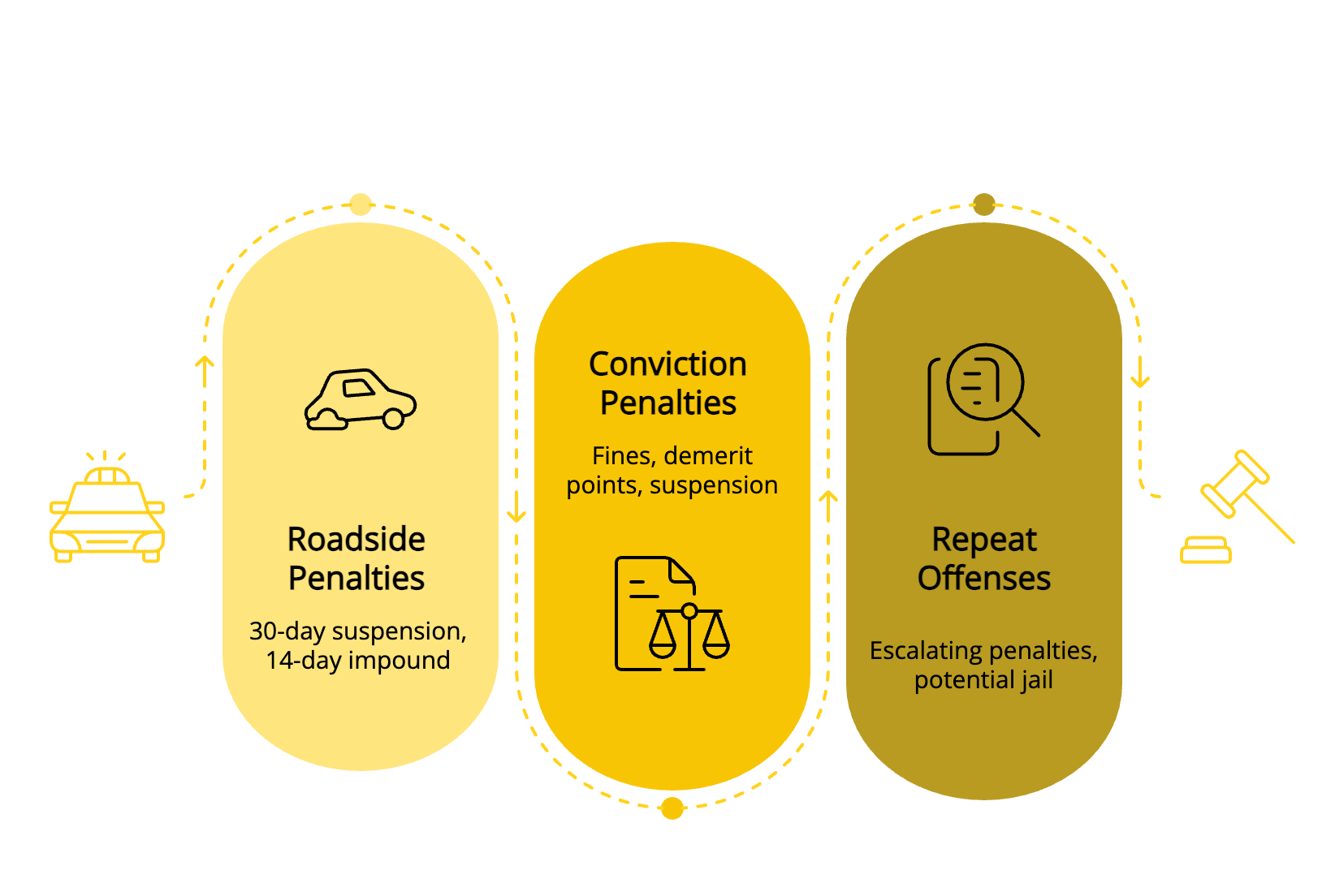
The consequences begin at the roadside, before any court date and before any finding of guilt. Police can impose an immediate 30-day licence suspension and a 14-day vehicle impoundment on the spot. That means you may be left at the side of the highway, hours from home, with no licence and no car, and you pay the towing and storage costs to get the vehicle back.
If the charge proceeds to a conviction, the penalties climb further. They can include a fine between $2,000 and $10,000, six demerit points, a licence suspension that starts at one to three years for a first conviction and escalates for repeat offences, and in some cases jail time. Stunt driving is not a criminal charge in Ontario, but the consequences are heavy enough that it should never be treated like an ordinary speeding ticket. This is a charge to get reviewed immediately.
Why paying the ticket right away can be a mistake
When you get home from the weekend and find the ticket in your bag, the instinct is to just pay it and move on. For most charges, that is the most expensive thing you can do.
Paying a ticket is a guilty plea. It enters a conviction on your record, applies the demerit points, and gives your insurer a documented reason to raise your premium at renewal. The fine is a one-time cost. The insurance increase can repeat for years, often adding up to far more than the ticket itself. Once you have paid, that conviction is very hard to undo.
There is also a timing trap. You generally have about fifteen days to respond to a ticket, and the options available to you, including the chance to have the charge reviewed or reduced, depend on responding properly within that window. Paying early closes those doors. So does ignoring it, which can lead to the fine going to default and, eventually, a licence suspension of its own.
The better move is to keep the ticket, note the deadline, write down what you remember about the stop while it is fresh, and get advice before deciding anything.
When to call a traffic ticket paralegal
Some tickets are minor. Others are not, and it is not always obvious which is which until someone reviews the details. As a general rule, it is worth speaking to a licensed paralegal any time a charge carries demerit points, a possible suspension, or a likely insurance increase, and certainly any time you are facing stunt driving, impaired driving, or driving under suspension.
A paralegal can request disclosure, examine how the stop and any speed measurement were conducted, and identify whether there are grounds for a withdrawal or a reduction. Even where a full withdrawal is not realistic, a reduction can mean fewer points, a smaller fine, and far less insurance damage. And you do not have to appear in court yourself, which matters when the ticket was issued hours away from where you live.
XPolice has defended Ontario drivers since 2003, with a team of experienced licensed paralegals and former police officers who understand enforcement from both sides. We do not plead guilty just to save a point or two. We review every detail and pursue the best available outcome, whether the charge is a speeding ticket, careless driving, stunt driving, or an impaired charge, and we go to court so you do not have to.
If you were pulled over and ticketed this Canada Day weekend, do not assume paying is your only option. Contact XPolice for a free consultation. We will review your charge, explain your options, and give you an honest assessment of what we can do.
Call 1-888-XPOLICE (1-888-976-5423). We go to court for you so you do not have to.
FAQ
What are the most common tickets over Canada Day weekend?
Speeding, distracted driving, impaired driving, stunt driving, and driving under suspension. Enforcement increases over long weekends, and these charges can affect your record and insurance for years.
What happens if I am charged with stunt driving on Canada Day?
You can face an immediate 30-day licence suspension and a 14-day vehicle impoundment at the roadside, before any court date. On conviction, penalties can include a fine of $2,000 to $10,000, six demerit points, a lengthy licence suspension, and possible jail time.
Are RIDE stops legal, and do I have to stop?
Yes. RIDE programs are a lawful part of impaired driving enforcement in Ontario, and you are required to stop when directed. Impaired and over-80 charges are criminal matters with serious consequences, so plan a sober ride home before you go out.
Should I just pay my ticket to get it over with?
Not before understanding the consequences. Paying is a guilty plea that locks in the fine, the demerit points, and a conviction. Many tickets can be reduced if you respond properly and on time, so it is worth having yours reviewed first.
I got a ticket far from home. Do I have to travel back for court?
Usually not. The matter is handled where the ticket was issued, but a licensed paralegal can represent you there so you do not have to make repeat trips across the province.